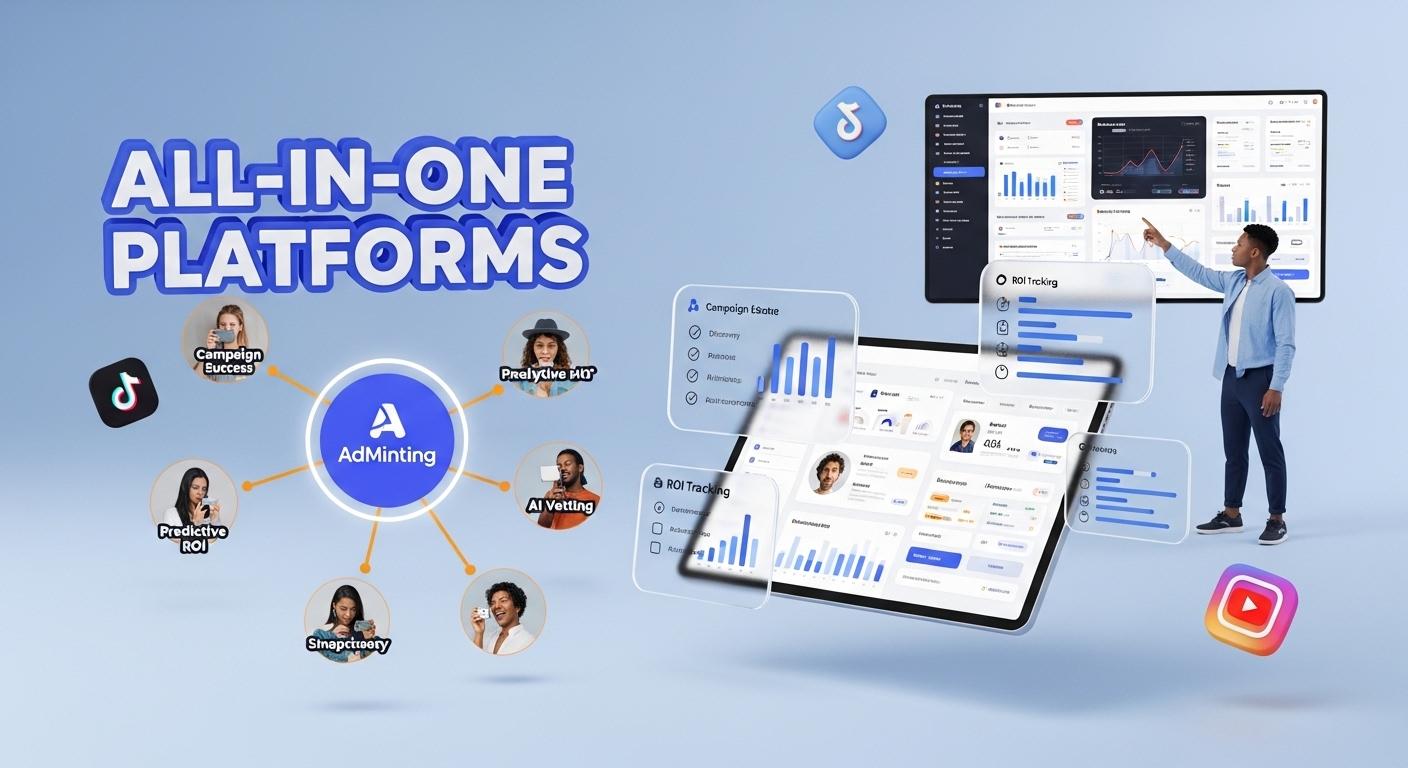
Top 7 All-in-One Influencer Marketing Platforms for Campaign Management

Chukwunyere Ebube
March 20, 2026
Top 7 All-in-One Influencer Marketing Platforms for Campaign Management
Influencer marketing has grown from a simple social media tactic into a structured marketing channel used by brands worldwide. Companies now collaborate with creators on platforms like Instagram, TikTok, YouTube, and X to promote products, drive engagement, and generate sales.
But managing influencer campaigns can quickly become complicated. Brands often need to:
- Discover relevant influencers
- negotiate collaborations
- manage multiple campaigns simultaneously
- approve content
- track engagement and conversions
- measure return on investment
Handling all these tasks manually can overwhelm marketing teams. This is why all-in-one influencer marketing platforms have become essential tools for modern marketing teams.
These platforms combine creator discovery, campaign management, communication, analytics, and reporting into a single dashboard, making it easier to run large influencer campaigns efficiently.
In this guide, we explore seven all-in-one influencer marketing platforms that help brands and agencies manage influencer campaigns effectively in 2026.
Why Brands Need Campaign Management Platforms
A mid-size e-commerce brand once launched an influencer campaign with more than 30 creators across Instagram and TikTok. Initially, the team tracked everything manually in spreadsheets. Within weeks, problems began to appear.
Emails got lost. Posting schedules overlapped. Campaign results were difficult to measure.
Eventually, the brand adopted an influencer marketing platform that centralized creator discovery, campaign management, and analytics. The difference was dramatic.
Instead of guessing what worked, the team could track every click, engagement, and conversion from each influencer campaign. That is the power of an all-in-one influencer marketing platform.
By the end of this article, you will understand:
- What all-in-one influencer marketing platforms are
- Why brands use them to manage campaigns
- The best platforms available in 2026
- How to choose the right platform for your marketing strategy
If your business plans to run influencer campaigns regularly, these tools can help you scale efficiently.
So What Makes an Influencer Marketing Platform “All-in-One”?
An all-in-one platform typically combines several capabilities into a single ecosystem. These usually include:
Influencer Discovery
Search large creator databases and filter by niche, audience demographics, engagement rate, and location.
Campaign Management
Create campaigns, invite creators, manage deliverables, and coordinate posting schedules.
Creator Relationship Management
Track influencer partnerships, contracts, and communication.
Content Approval
Review influencer content before it goes live.
Performance Tracking
Monitor engagement, reach, conversions, and ROI.
Analytics and Reporting
Generate detailed campaign reports for marketing teams and stakeholders.
These features allow businesses to run structured, measurable influencer campaigns instead of unorganized collaborations.
Here are some of the most recognised all-in-one marketing platforms for influencer campaign management
1. Adminting
One of the emerging performance-driven influencer marketing platforms is Adminting, designed to connect brands with niche creators and digital promoters.
Unlike traditional influencer platforms that focus mainly on follower counts, Adminting emphasizes community-based advertising and measurable campaign performance.
The platform functions as a marketplace where advertisers collaborate with niche community promoters and influencers to distribute campaigns across trusted networks. ( F6S )
Key Features
- Community-Driven Influencer Network
Brands gain access to promoters and influencers who manage niche online communities across social platforms. This allows businesses to reach audiences that already trust the creator promoting the message.
- Simple Campaign Creation
Advertisers can quickly launch campaigns using a user-friendly interface. The platform allows brands to design targeted advertising campaigns without a complicated setup.
- Real-Time Campaign Tracking
One of Adminting’s strongest features is transparent campaign tracking and analytics dashboards. The platform provides:
- real-time campaign monitoring
- engagement tracking
- detailed analytics reports
These reports help marketing teams understand exactly how campaigns perform and make better marketing decisions. ( Adminting )
- Stakeholder-Friendly Campaign Analytics
Adminting’s analytics dashboard presents campaign performance in a way that can easily be understood by marketing managers, executives, and other stakeholders. Instead of complicated raw data, the platform provides clear insights that simplify campaign reporting.
- Performance-Driven Advertising
Brands pay based on measurable outcomes such as views, clicks, or engagement rather than vague impressions. ( Adminting )
Who Should Use Adminting?
- brands seeking targeted niche audiences
- startups running performance-driven campaigns
- businesses entering the creator economy
- marketing teams that need transparent analytics
Businesses interested in running campaigns can visit adminting.com and sign up either as:
- an advertiser (for brands and businesses seeking visibility and engagement), or
- a promoter (for influencers and creators).
Within minutes, users can become part of the Adminting advertising community.
2. Upfluence
Upfluence is one of the most established influencer marketing platforms used by brands worldwide.
It provides a complete suite of influencer marketing tools, including:
- influencer discovery
- automated outreach
- campaign management
- sales tracking
The platform integrates with e-commerce systems like Shopify and WooCommerce, allowing brands to connect influencer campaigns directly to product sales. ( Stack Influence )
This makes Upfluence especially popular among direct-to-consumer brands.
3. Aspire
Aspire (formerly AspireIQ) focuses heavily on building long-term relationships between brands and creators.
Rather than one-time influencer posts, Aspire helps companies develop creator communities and ambassador programs.
The platform supports:
- influencer recruitment
- relationship management
- user-generated content campaigns
- campaign analytics and reporting. ( wizart.ai )
It is widely used by lifestyle, fashion, and e-commerce brands.
4. GRIN
GRIN is another powerful influencer marketing platform built specifically for e-commerce companies.
Its biggest strength is deep integration with online stores.
Brands can:
- track influencer sales through unique links
- manage creator relationships
- monitor campaign ROI in real time. ( NERDBOT )
GRIN is especially popular with direct-to-consumer brands running large creator programs.
5. Creator.co
Creator.co is a performance-focused influencer marketing platform that connects brands with thousands of content creators.
The platform allows businesses to:
- run influencer campaigns
- manage creator collaborations
- track engagement and conversions.
It is particularly effective for direct response campaigns, where brands need measurable results from influencer partnerships. ( Adminting )
6. Influencity
Influencity provides advanced analytics tools that help marketers understand influencer audiences in detail.
Its features include:
- audience demographic analysis
- influencer discovery tools
- campaign performance tracking
- ROI reporting.
Brands that want deeper insights into audience behavior and campaign performance often use Influencity. ( Adminting )
7. Brandwatch Influence
Brandwatch Influence combines influencer marketing with powerful social listening capabilities.
This means brands can:
- Discover influencers discussing relevant topics
- Monitor brand mentions
- Analyze campaign impact across social platforms.
The platform is often used by larger organizations managing multi-market influencer campaigns. ( Adminting )
Why Brands Use Influencer Marketing Platforms to Manage Campaigns
Running influencer campaigns manually may work for a small collaboration with one or two creators. But once a brand begins working with 10, 20, or even 100 influencers at once, the complexity grows quickly.
Marketing teams must coordinate communication, approve content, track results, and calculate campaign return on investment. Without proper systems, campaigns become difficult to manage.
This is why brands increasingly rely on all-in-one influencer marketing platforms.
These platforms simplify the entire campaign lifecycle and allow marketing teams to manage multiple collaborations from a single dashboard.
Here are the main reasons brands use them.
1. Centralized Campaign Management
One of the biggest challenges in influencer marketing is keeping everything organized.
Influencer campaigns often involve:
- campaign briefs
- creator contracts
- content approvals
- posting schedules
- payment agreements
- performance tracking
Without a structured system, brands often end up using multiple tools such as spreadsheets, email threads, and messaging apps.
Influencer marketing platforms centralize all these activities in one place.
Campaign managers can:
- create campaigns
- invite influencers
- communicate with creators
- approve content
- track campaign progress
This significantly reduces operational confusion.
2. Easier Influencer Discovery
Finding the right influencers can be one of the most time-consuming parts of a campaign.
Brands need creators who match their:
- niche
- audience demographics
- engagement levels
- geographic target
Influencer marketing platforms provide searchable creator databases that allow marketers to filter influencers based on these criteria.
For example, a skincare brand may want:
- beauty influencers
- audiences primarily between ages 18–35
- strong engagement on Instagram or TikTok
Instead of manually searching social media, the platform surfaces creators that match those requirements.
3. Content Approval and Brand Safety
Brands must ensure influencer content aligns with their messaging before it goes public.
Influencer platforms allow marketing teams to review and approve creator content before publishing.
This helps prevent issues such as:
- incorrect product messaging
- compliance violations
- off-brand communication
By implementing structured approval workflows, brands protect their reputation while maintaining creative collaboration with influencers.
4. Performance Tracking and Analytics
One of the biggest questions marketing leaders ask is:
“Is this campaign actually working?”
Influencer marketing platforms solve this problem through real-time analytics and reporting dashboards.
These tools track key campaign metrics such as:
- impressions
- engagement rate
- clicks
- conversions
- return on ad spend (ROAS)
Platforms like Adminting go a step further by presenting campaign analytics in clear dashboards that stakeholders can easily interpret, allowing marketing teams to explain campaign results to management or clients.
This transparency helps brands optimize future campaigns.
5. Scalable Campaign Execution
As businesses grow, influencer marketing campaigns often expand across:
- multiple social media platforms
- several countries
- dozens of creators
Managing such campaigns manually becomes impossible.
Influencer marketing platforms enable brands to scale their campaigns without losing oversight.
With automation tools and performance analytics, brands can run multiple campaigns simultaneously while maintaining consistent quality and tracking results accurately.
How to Choose the Right Influencer Marketing Platform
Not every influencer marketing platform works the same way.
Some focus on influencer discovery, others specialize in campaign analytics, and some provide full campaign management.
Choosing the right platform depends on your marketing goals, budget, and campaign complexity.
Here are the key factors to consider when selecting an influencer marketing platform.
1. Campaign Objectives
Start by defining your primary campaign goal.
Different platforms support different marketing objectives such as:
- brand awareness
- product launches
- lead generation
- sales conversion
If your goal is performance-driven marketing with measurable campaign results, choose platforms that emphasize analytics and performance tracking, such as Adminting.
2. Creator Network Quality
The strength of an influencer platform often depends on the quality of its creator network.
Look for platforms that offer:
- niche influencers
- engaged audiences
- verified creator profiles
For example, some platforms focus on celebrity influencers, while others focus on micro-influencers or niche community promoters. Your choice should align with the audience you want to reach.
3. Campaign Analytics and Reporting
Marketing decisions should be based on data.
Choose platforms that provide:
- real-time campaign performance metrics
- easy-to-understand reporting dashboards
- exportable campaign analytics
Platforms that offer clear campaign performance insights help marketing teams communicate results effectively to executives and stakeholders.
4. Ease of Use
Some influencer platforms are highly complex and require training before teams can use them effectively.
Look for a platform that provides:
- intuitive campaign setup
- simple dashboards
- clear campaign tracking tools
Ease of use ensures marketing teams can launch and manage campaigns quickly without unnecessary technical barriers.
5. Pricing and Budget Compatibility
Influencer marketing platforms use different pricing models.
Common pricing structures include:
- subscription plans
- commission-based fees
- performance-based pricing
Startups and small businesses should choose platforms that offer flexible pricing or performance-based payment models to reduce financial risk.
6. Integration With Marketing Tools
Many marketing teams already use tools such as:
- CRM systems
- social media management platforms
- advertising analytics tools
The right influencer marketing platform should integrate smoothly with these systems to create a unified marketing workflow.
Are Influencer Marketing Platforms Worth It?
For brands running multiple influencer campaigns, these platforms can dramatically improve efficiency.
Without a structured system, teams may struggle to:
- coordinate influencer collaborations
- track campaign performance
- prove marketing ROI.
Platforms like Adminting and others help transform influencer marketing into a measurable, data-driven marketing channel.
Conclusion
Influencer marketing continues to expand as brands invest more in creator partnerships.
However, running influencer campaigns manually can quickly become complex.
All-in-one influencer marketing platforms simplify the entire process by combining:
- influencer discovery
- campaign management
- creator communication
- performance tracking
- analytics reporting
Platforms like Adminting, Upfluence, Aspire, GRIN, Creator.co, Influencity, and Brandwatch Influence give businesses the tools needed to manage influencer campaigns efficiently.
For brands seeking transparent analytics, community-driven marketing, and performance-focused campaigns, platforms like Adminting offer a modern approach to influencer marketing.
Businesses and creators interested in joining the ecosystem can visit Adminting and sign up as an advertiser or promoter to start running campaigns.
FAQs
Q: What is an all-in-one influencer marketing platform? It is a software platform that combines influencer discovery, campaign management, creator collaboration, and analytics in one system.
Q: Why do brands use influencer marketing platforms? They help brands manage multiple campaigns, track influencer performance, and measure marketing ROI more effectively.
Q: Can startups use influencer marketing platforms? Yes. Many platforms offer scalable pricing that allows startups to run campaigns with micro-influencers.
Q: What makes Adminting different from other influencer platforms? Adminting focuses on niche community promoters and provides transparent campaign analytics that help stakeholders clearly understand marketing performance.
Q: Are influencer marketing platforms only for large companies? No. Many small businesses and startups use these platforms to organize and scale their influencer campaigns.
References
- https://adminting.com – Adminting Platform Overview ( Adminting )
- https://www.f6s.com/company/adminting – Adminting Company Profile ( F6S )
- https://adminting.com/blogs/performance-driven-influencer-platforms-2025 ( Adminting )
- https://stackinfluence.com/top-10-micro-influencer-platforms-in-2025 ( Stack Influence )
- https://wizart.ai/blog/top-10-influencer-marketing-platforms ( wizart.ai )
Recommendation
If your brand plans to run multiple influencer campaigns, consider using a structured influencer marketing platform rather than managing everything manually.
A good starting point is Adminting, which focuses on:
- niche community marketing
- transparent campaign tracking
- performance-driven influencer campaigns.
Visit Adminting to sign up as an advertiser or promoter and start building creator-driven campaigns that deliver measurable results.