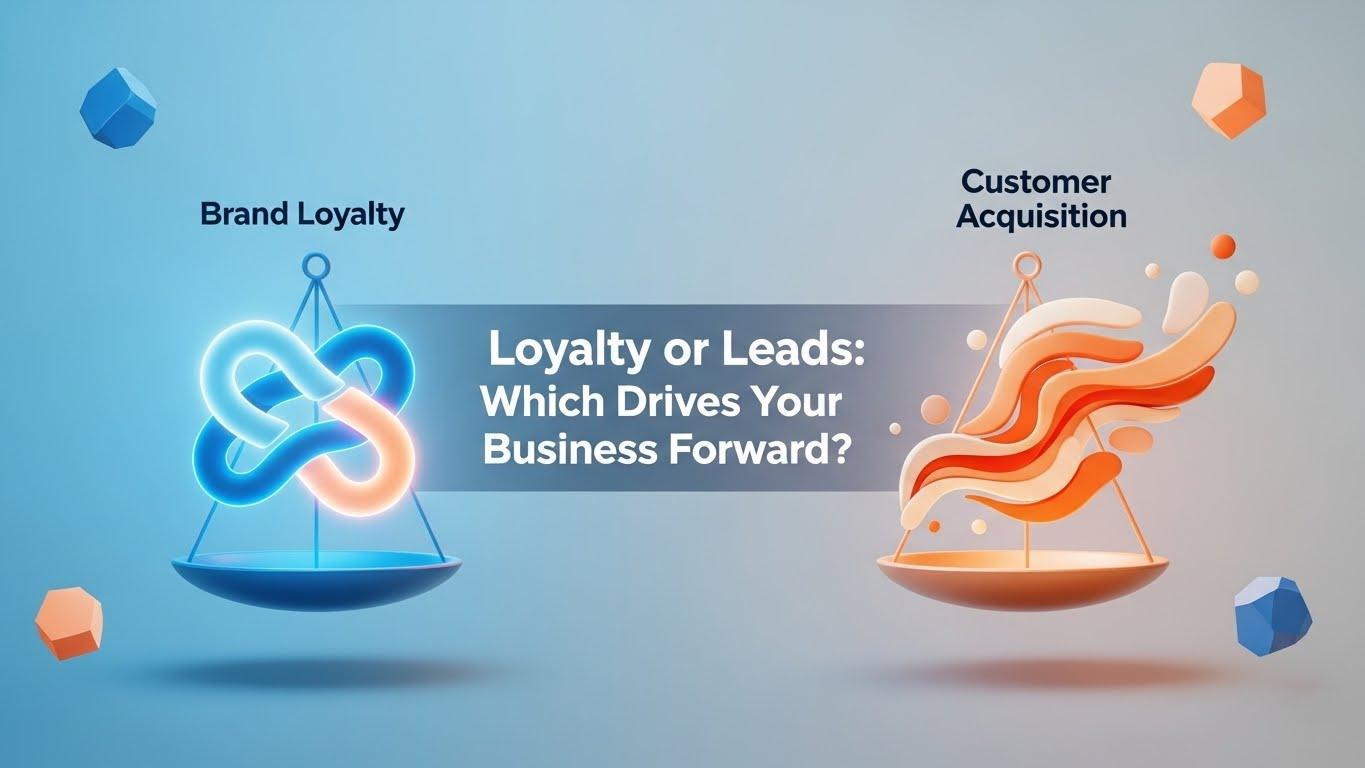
Retention Beats Acquisition: Your Strategy To Maximize Customer LTV

Joel Otimkpu
December 3, 2025
The Treadmill Trap: Why Perpetual Acquisition Is an Unsustainable Lie
Ever noticed how many businesses operate like they’re perpetually stuck on an ever-accelerating treadmill? They run harder, spend more, and focus 90% of their precious energy on one thing: new customer acquisition. This constant, frantic chase is fueled by a pervasive, fundamental lie—the belief that sustainable growth must always start with the expensive word, "new."
This reactive, short-term focus creates a state of perpetual scrambling, quietly draining marketing budgets across every sector. Wait, let's look at the actual data. The numbers confirm the harsh, undeniable reality of this vicious cycle: Customer Acquisition Costs (CAC) haven't just risen; they've exploded. Some reports indicate that acquisition costs have more than tripled over the last eight years (Industry Analysis).
Whether you operate a sprawling e-commerce store or a tight B2B SaaS platform, the cost of reaching a cold, skeptical lead through today’s saturated digital channels has become prohibitive. Every marketing dollar now buys less attention, forcing teams to pay an increasingly high premium for diminishing returns. You are essentially paying to reach people who don't know, like, or trust you yet.
This is the core of the "Treadmill Trap": the faster you run to hit your acquisition goals, the steeper the incline gets. Why? Because you're feeding enormous, efficient digital platforms that are optimized for spending *your* money, not for fostering your sustainable growth. Relying solely on external channels for fresh leads is no longer a viable growth strategy; it is a profound dependency that leaves your entire business vulnerable to shifting algorithms, new privacy regulations, and ever-rising auction prices.
The conventional marketing playbook—the one that prioritizes the first sale above all else—is fundamentally broken in the current economy. Chasing the fleeting dopamine high of a new conversion is easy and immediately satisfying, yes, but it distracts from the deeper, more strategic work needed to build genuine, enduring value. This addiction to acquisition forces businesses into a reactive, hunting stance instead of maximizing the deep, compounding value of the tribe they already possess.
Here’s the inconvenient truth you must internalize right now: the only sustainable way to exit the treadmill is to stop running toward the *new* and start aggressively investing in the *now*. This isn’t a small change; it requires a radical shift in mindset, pivoting from expensive, external acquisition to the strategic, continuous cultivation of high Lifetime Value (LTV). The real question for your team is this: Are you willing to trade the fleeting dopamine hit of a new acquisition for the enduring, compounding loyalty of a community?
The Ultimate ROI: Calculating the Irrefutable Advantage of Lifetime Value (LTV)
For decades, the gold standard in marketing has been the relentless pursuit of new customers. Every budget meeting, every performance review, seems to fixate solely on lowering the Customer Acquisition Cost (CAC), treating it like the ultimate key performance indicator (KPI). But as ad costs spiral upward and platform competition intensifies, this hyper-focus on the expensive "hunt" has become an economically irresponsible strategy. Today, the focus on LTV—not CAC—is the defining metric of truly successful, modern businesses.
The smartest business leaders aren’t just looking at the initial, one-off transaction anymore. They’re strategically shifting their entire gaze to the long-term, compounding relationship. The new KPI that truly matters is Customer Lifetime Value (LTV)—the total revenue you can realistically expect from a single customer throughout the entire duration of your relationship. Simply put: increasing LTV through dedicated retention efforts is exponentially smarter, dramatically cheaper, and far more sustainable than constantly chasing the next cold lead. It’s the difference between planting an oak tree and buying a bouquet of cut flowers.
The Irrefutable Economics of Retention
If you want the hard numbers—the data that should absolutely dictate your budget allocation—the case for retention is overwhelming and impossible to ignore. Here is the foundational economic truth that underpins this strategic shift: it is dramatically easier, and exponentially cheaper, to sell to someone who already trusts you than to convince a complete stranger to take a leap of faith. Retention, not acquisition, is the true lever for scalable, lasting profitability.
Consider the cold reality of the typical sales funnel. The probability of successfully converting a brand new prospect ranges between a slim 5% and maybe 20% if you’re lucky. Now, look at the other side of that ledger: the probability of successfully selling to an existing, already satisfied customer jumps to a whopping 60% to 70% (Harvard Business Review). That massive gap—that difference in effort and certainty—is the "Irrefutable Advantage" of LTV. That, my friends, is efficiency.
When you nurture these existing relationships, you’re not just securing a single repeat purchase; you are activating free, trusted marketing. This trusted relationship activates what we call the Loyalty Dividend. Loyal customers generate invaluable word-of-mouth promotion, which is consistently the most credible and cost-effective form of acquisition available today. When you invest in retention, you buy down risk and build an appreciating asset—the passionate belief of your customer base. Ask yourself honestly: is your current budget structure reflecting this irrefutable economic reality, or are you still over-indexing on the expensive, high-risk acquisition hunt?
Moving Beyond Transactions: Building a Brand Tribe, Not Just a Mailing List
Everyone in marketing seems obsessed with the glamorous hunt for new customers, but this preoccupation comes at a profound cost. As digital ad costs continue to rise exponentially, chasing continuous acquisition is becoming a fiscally irresponsible strategy that burns capital without building lasting equity. The truth is, maximizing the Lifetime Value (LTV) of your *current* customer base is the single most powerful and accessible growth lever available today. Studies show that a mere 5% increase in customer retention can boost profits significantly—a far greater, more reliable return than equivalent spending on new customer acquisition (ClearlyRated).
The Brand Community: Your Modern Competitive Engine
The shift required is simple but profound: you must stop treating customers merely as temporary transactions in a financial spreadsheet, and start seeing them as relational, compounding assets. A typical mailing list is just a passive queue of individuals waiting for your next promotion; a brand community, or "tribe," is something altogether different. It’s a living, breathing ecosystem built around a shared identity, value, or mission.
This community doesn’t just buy your product; they actively advocate for it, defend it fiercely, and often co-create its future, turning a simple purchase into a shared experience. This is where true, unbreakable loyalty resides. Think about the intense, almost visceral loyalty surrounding brands like Harley-Davidson, Tesla, or the legendary debate between "iPhone versus Android." These aren't just consumer choices anymore; they are tribal affiliations that help define the customer’s identity.
When your customers are willing to argue on your behalf, bring new people into the fold, and defend you against critics, you have successfully built a competitive moat that your rivals simply cannot cross. They can try to copy your features, but they can never copy your tribe.
Cultivating Advocacy: From Promotions to Dialogue
If you want to move beyond the shallow, transactional relationship, you must first move beyond endless, self-serving promotions. Building a powerful community requires you to cultivate deep, continuous engagement—a real commitment to fostering relationships, not just chasing immediate revenue. This means fundamentally shifting your focus from the question, "What can we sell them next?" to the more powerful inquiry: "How can we serve them and meaningfully connect them to one another?"
Instead of paying influencers solely to showcase a product or deliver transactional clicks, the strategic move is to leverage them to spark meaningful dialogue. You should use your engagement platforms—like Adminting—not just to broadcast corporate announcements or sales figures, but to run genuinely engaging polls, host insightful Q&A sessions, and ask authentic questions about how your brand fits into their lives. You must treat every customer interaction as an opportunity to reinforce shared values, not just to complete a sale (Hallmark Business).
Turning Loyalists into Lifelong Ambassadors
The most effective and economically sound communities are the ones that become self-sustaining. We already know the economics of loyalty prove that selling to an existing customer is 60–70% easier than acquiring a new one. But here’s the kicker: the gold standard is when your existing customers become so passionate that they bring in new ones for free, thereby drastically reducing your Customer Acquisition Cost (CAC) down to zero.
This is the immense power of a formal Ambassador Program. Use specialized tools to easily identify your super-users—the customers who are already commenting, reviewing, and recommending—and empower them with recognition. Give them early access to new features, exclusive content, and a clear, recognized path to becoming official promoters. By recognizing and actively rewarding this organic advocacy, you transform your marketing into authentic, trusted word-of-mouth that builds market share organically and reliably. The question for your organization is simple: Are you investing in a revolving door of temporary buyers, or are you sparking the enduring fires of a long-term tribe?
The Unbreakable Moat: When Loyalty Becomes Your Only True Competitive Defense
Have you noticed how much harder—and, frankly, more expensive—it is to simply get someone’s attention today? For decades, the business world was utterly obsessed with optimizing the top of the sales funnel, pouring endless capital into new customer acquisition. But the rules have fundamentally changed. Relying on acquisition as the primary growth engine is now akin to bringing a knife to a gunfight; it is an outdated, high-risk strategy in a saturated, digital market.
Here is the stark truth that mandates a strategic pivot across your organization: customer acquisition costs (CAC) have reportedly risen by 60% in the past five years, demanding a profound and immediate reassessment of marketing spend (LoyaltyLion). Constantly hunting for new buyers is no longer a viable long-term strategy that delivers acceptable returns. In this volatile environment, the mantra Retention is the New Acquisition becomes an economic reality, and increasing the Lifetime Value (LTV) of your existing customer base is the only smart, sustainable investment left.
The Loyalty Dividend: Beyond Repeat Purchases
What happens when a customer doesn't just buy your product, but actively defends your brand in public forums? You have successfully moved beyond simple transactions and entered the realm of the *Brand Community*. This is far, far more than a simple mailing list or a loose social media group; it’s a self-sustaining tribe whose identity is organically wrapped up in your offering. They become a powerful, emotional anchor for your brand in a volatile and competitive market.
Think of the fierce, almost religious loyalty seen in certain gaming communities or lifestyle brands. These customers are not merely satisfied; they are true believers who generate unstoppable, credible Word of Mouth (WOM) marketing. This deep, shared identity forms the core structure of a competitive moat that rivals cannot buy, purchase, or easily cross. It gives you protection. This is your ultimate defense mechanism against the constant threat of commoditization.
The Unstoppable Economics of Loyalty
The strategic shift toward prioritizing retention is not merely philosophical; it’s a cold, hard economic necessity that dictates long-term survival. Studies repeatedly show that the probability of selling to an existing customer is dramatically higher than selling to a new prospect, often making the effort 60–70% easier and faster (Coniq). This is the immediate efficiency dividend of cultivating loyalty.
This massive reduction in friction frees up enormous marketing budgets that were previously wasted on high-risk, low-conversion cold outreach. Furthermore, focusing strategically on brand loyalty can lead to an 85% increase in customer lifetime value (LTV) (Coniq). A truly loyal customer not only buys more frequently but also converts their network for free, generating that invaluable, organic WOM that consistently outperforms any impersonal paid ad campaign, giving you a compounding advantage year after year.
Building the Moat: Engagement Over Transaction
If you want fierce advocacy, you must invest deeply and consistently in engagement. Most companies make the crucial mistake of only paying influencers to sell, treating their community solely as a transactional distribution channel. That's a huge waste of potential! The strategic move is to pay them to *engage*—to facilitate genuine conversation, share expert knowledge, and foster connection between community members.
Platforms like Adminting should be used not just to close a quick sale, but to act as a responsive community hub. Create dialogue by running insightful polls, asking genuine questions about customer pain points, and facilitating helpful connections between your users. Most importantly, identify your biggest fans—those already leading conversations—and formally convert them into influential brand promoters through structured Ambassador programs. By recognizing and rewarding engagement and advocacy, you effectively turn your best customers into the core, active pillars of your defense strategy.
The truth is, any competitor with enough capital can copy your features, undercut your price, or outspend you on Google Ads for a quarter. But they cannot replicate the deep, emotional trust and shared identity of a loyal community. A thriving brand tribe generates its own gravity, pulling in new customers effortlessly while simultaneously insulating your business from market volatility. It is the definitive defense mechanism in the modern economy.
The New CEO Mandate: Reinvesting in the Fires of Long-Term Loyalty
Have you noticed how much of your current marketing budget seems dedicated to filling a leaky bucket? For years, the C-suite obsession has been the Customer Acquisition Cost (CAC), treating it like a high score to chase in an unwinnable game. But chasing this metric in today’s economic landscape is fiscally unsustainable; the prices for new leads are skyrocketing, and the returns are diminishing rapidly. This outdated, short-term focus must give way to a strategic, deep emphasis on retention.
The Economic Reality: Retention is the New Acquisition
The modern mandate for visionary leadership is simple: stop viewing customer retention as a soft skill or merely a customer service responsibility. Instead, start treating it as the primary infrastructure for sustainable market dominance. Here is the cold, hard math that should immediately guide your budget shift: on average, it can cost four to five times more to acquire a new customer than to retain an existing one (Forbes). Every dollar strategically spent on retention is a dollar spent on measurable, long-term efficiency.
But this isn't just about saving money; it’s about compounding growth and building intrinsic value. Studies show that a mere 5% increase in customer retention rates can boost profitability significantly, often by 25% or more, precisely because loyal customers are more likely to upsell and increase their average spend over time (ClearlyRated). Your existing customer base is, therefore, your most valuable and often most underutilized asset, representing guaranteed future revenue streams.
Building the Loyalty Moat: From Transaction to Tribe
This strategic shift requires moving beyond simple transactional loyalty—the kind based purely on temporary discounts and points systems—to fostering deep, emotional loyalty. True long-term value comes from cultivating a robust *Brand Community*. This is a tribe of customers who don't just purchase your product; they passionately advocate for it, defend it from rivals, and evangelize it tirelessly to their network.
Think of the fervent loyalty surrounding category-defining brands. Their customers aren’t just satisfied; they are ideologically aligned with the brand’s mission and identity. When you successfully ignite these "fires of loyalty," you generate priceless Word of Mouth marketing that competitors simply cannot buy, allowing you to sidestep the expensive acquisition treadmill entirely. As the data consistently shows, selling to these existing, engaged customers becomes 60–70% easier than pitching a skeptical new prospect.
The CEO’s Investment: Infrastructure, Not Expense
The New CEO Mandate is to treat your loyalty and community infrastructure not as a temporary marketing expense, but as a defining long-term capital investment. This is where tools like Adminting become strategic assets that drive profound efficiency. Instead of funneling your entire budget into expensive influencer campaigns designed solely for a quick transactional sale, leadership must redirect those dollars toward structured engagement and community-building efforts.
Use platforms like Adminting to create intimate, conversational spaces where your customers feel heard and valued. Pay your advocates not just to promote, but to engage, answer questions, and mentor new users, effectively turning your best customers into official promoters through structured Ambassador programs. You are investing in relationships, which, unlike traditional ad spend, yield returns that consistently appreciate over time, increasing Lifetime Value and Average Spend by 70–90% for top brands (LoyaltyLion). The real difference between market leaders and market followers in the next decade will be the depth and passion of their community. The question for leadership is no longer, "Can we afford to build this loyalty infrastructure?" but, "Can we truly afford not to?"
Sources
- Industry Analysis - Customer Acquisition Cost Statistics
- ClearlyRated - Customer Acquisition vs. Retention
- Coniq - Customer Loyalty Program Statistics & Trends
- Forbes - Customer Retention Versus Customer Acquisition
- Hallmark Business - Analyzing Your 2025 Customer Retention and Brand Loyalty Budget
- Harvard Business Review - The Economic Case for Customer Satisfaction
- LoyaltyLion - How to Use Loyalty to Offset Rising Customer Acquisition Costs
- LoyaltyLion - The True Cost of Customer Retention